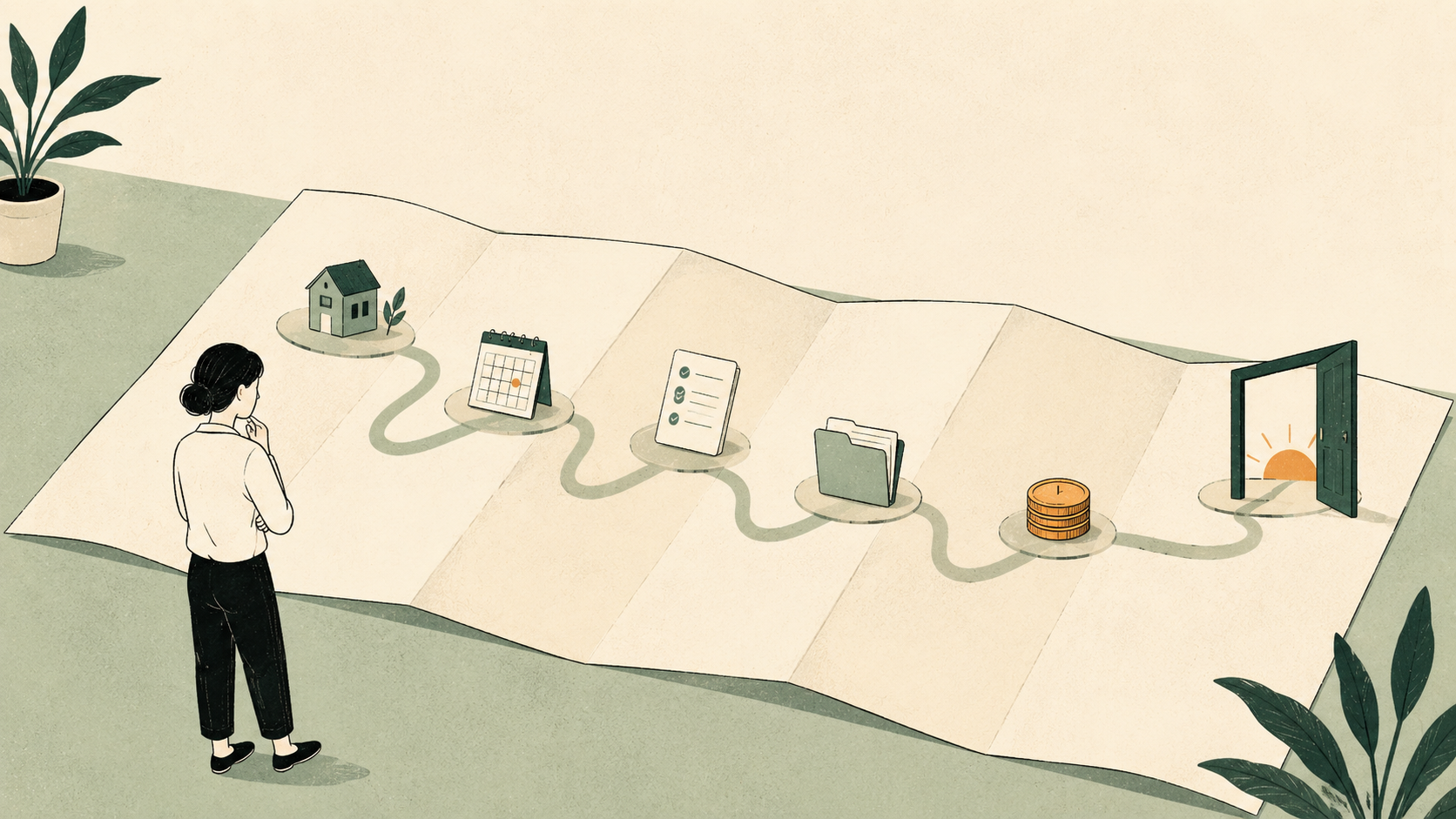
The first year of separation is mostly financial triage. You're covering the immediate — keeping the mortgage or rent going, managing child support, sorting bank accounts, paying legal fees. The actual number at the end of each month is worse than it was, and you already know that. The question is what to do about it once the triage phase is over.
Most financial advice about separation is focused on the split — how to divide assets, how to calculate child support, what the formula says. This article is about the next part: what to actually build, in what order, once you've got two feet on the ground.
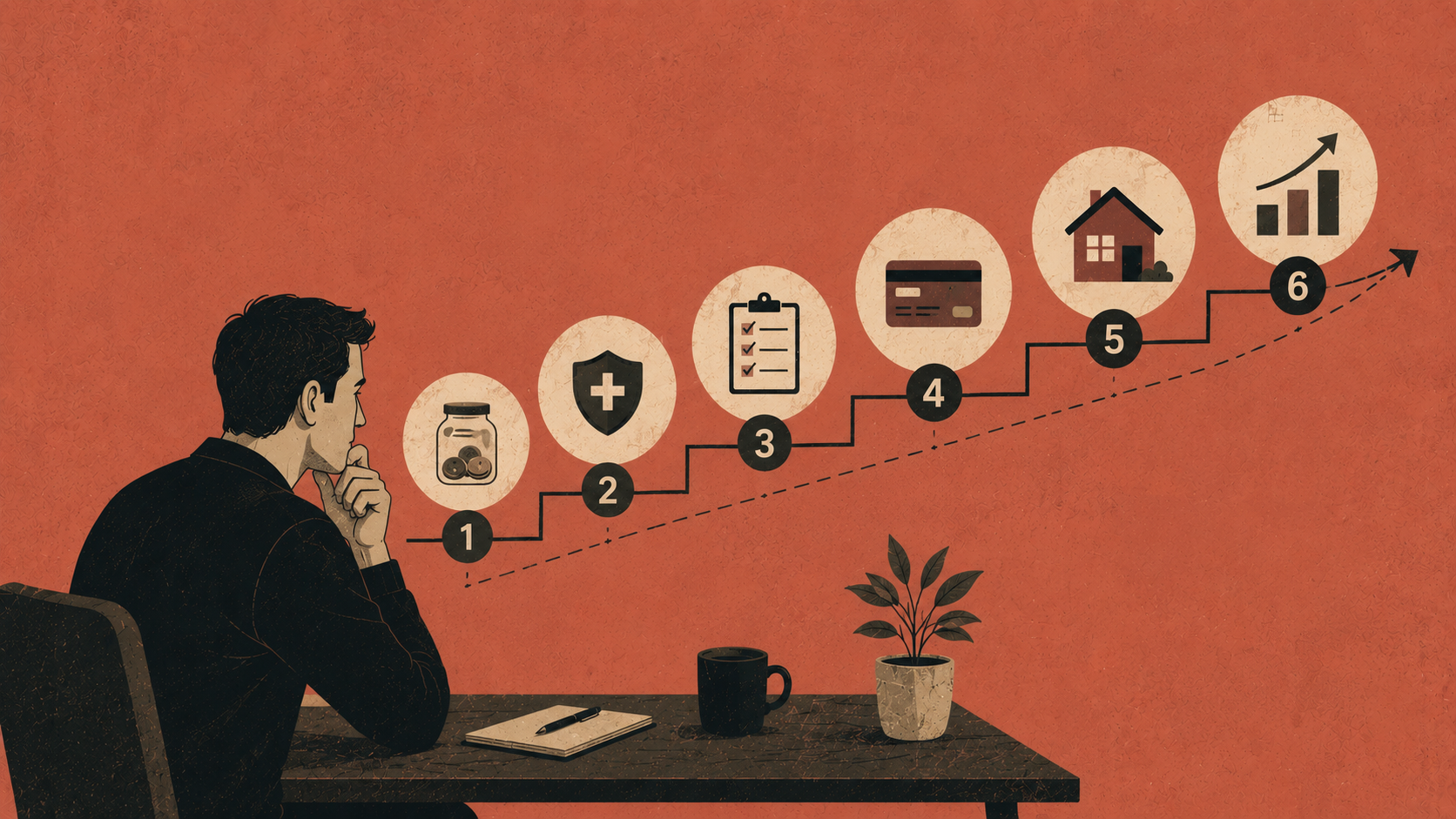
The order matters. Getting it wrong means fixing it later, usually at a cost.
Before the order of operations: get your actual numbers
No rebuilding plan works without a realistic baseline. You need one number: what you earn, minus what you reliably spend each month, equals your surplus or deficit.
Most separated people are surprised by the deficit. The cost of running a single-income household — rent or mortgage, utilities, food, transport, kids' costs, child support, subscriptions, insurance — often exceeds what feels like a reasonable income. There's no hack for this. The only way to deal with a structural deficit is to reduce outgoings, increase income, or both. But you can't do either without seeing the real number clearly first.
Use the Atlas budget tool, a spreadsheet, or a piece of paper. Put every monthly cost in one column. Put your take-home income in another. Stare at the gap. That gap is what you're managing.
Start with Atlas Finances tool before you optimise anything. Your order of operations only works if the numbers are real.
Step 1: Emergency buffer
Before anything else — before extra debt repayment, before investing, before anything strategic — you need a cash buffer.
Three months of essential expenses is the standard target. Essential means: rent or mortgage, utilities, food, child support, transport to work. Not lifestyle. Not the gym. The amount that keeps the household operational if your income stops for 90 days.
Three months is not a hard rule. If your employment is genuinely stable and you have other liquid assets, one month might be enough. If your income is variable — freelance, commission-based, insecure employment — four to six months is worth the slower pace.
This money lives in a high-interest savings account in your name only, separate from your everyday account. It is not touched. It is not "almost there." It is the thing you build before everything else, because without it, every unexpected cost becomes a debt, and debts compound.
Step 2: Dangerous debt
Once the buffer exists, address dangerous debt. That means high-interest debt: credit cards, personal loans, buy-now-pay-later balances.
The order: minimum payments on everything, then maximum available surplus thrown at the highest-interest balance until it's gone. Then the next highest. This is the debt avalanche method and it minimises the total interest paid.
The debt snowball (smallest balance first, regardless of interest rate) has psychological benefits — you see wins faster — but it costs more in interest over the medium term. Either method works. Pick one and run it consistently.
The things that often don't belong in this category: mortgage debt (interest rate is lower, often offset-able, and the asset is yours), and car debt at a low fixed rate. Focus the aggressive repayment energy on the high-interest stuff.
Do not put this step before the emergency buffer. A credit card with available credit is not an emergency fund. When the emergency comes, the credit card becomes a debt — and you now have both an emergency and a new debt to manage.
Step 3: Super contributions
Superannuation takes a hit in the years around separation — the property settlement may have reduced one or both balances, contributions may have been paused, and the focus has understandably been elsewhere.
Once the dangerous debt is under control, look at your super:
Are you making the standard employer contributions? Check your payslip. Some people in casual or irregular employment are under-contributed without realising.
Is there a contribution gap worth addressing? Salary sacrifice contributions are made pre-tax, which means each dollar costs you less than a dollar of take-home pay. If you have surplus income and a long-term super shortfall — which many separated people do, particularly those who were lower earners in the relationship — this is a lever worth using.
The First Home Super Saver Scheme doesn't apply here, but the downsizer contribution (for eligible over-55s) and the catch-up contributions rule (if your balance is below $500,000, unused concessional cap from the last five years can be carried forward) are worth knowing about if they apply to you.
Even $50 extra per fortnight into super, started at 42, becomes meaningful by retirement. The compounding works slowly, then not slowly.
Step 4: Insurance review
After separation, your insurance position changes in ways that are easy to miss.
Life insurance and income protection are the critical ones. A single-income household with children and child support obligations is more financially exposed than a coupled household was. If you die or can't work, the gap is larger and there's no partner's income to partially absorb it.
Check your current life and income protection coverage — both inside super and any standalone policies. Is it adequate for your actual situation now? If you haven't reviewed it since the separation, you probably need to.
Also check: private health insurance (are you now on the right level of cover for a single adult with part-time kids?), home and contents (is the contents cover appropriate for your actual belongings?), and vehicle insurance.
Don't buy more insurance than you need. But don't carry less than a single-parent household requires. The calculation changed when the relationship ended.
Step 5: Saving for the medium-term
Once the buffer exists, dangerous debt is gone, super is on track, and insurance is right-sized, you can start building toward medium-term financial goals.
These look different for everyone but often include: building a deposit if homeownership is a future goal, saving for a car replacement, accumulating enough to reduce stress around the annual costs that blindside people (registration, rates, school fees, Christmas).
A high-interest savings account or term deposit is appropriate for savings needed within two to three years. Offset accounts against a mortgage are effective if you have one. The share market is appropriate for savings you genuinely don't need for five-plus years and can tolerate losing value temporarily.
Don't invest money you can't afford to lose short-term in assets that can lose value short-term. That seems obvious. It becomes less obvious when the stock market has been rising for three years.
Step 6: Income growth
This is the lever that changes the maths most significantly — and it's the last on the list not because it's least important, but because the earlier steps have to be stable before income growth is the main priority.
Income growth for a separated parent can mean: career progression, skill development, a salary renegotiation, a side income that uses existing skills, or a shift to higher-paying work. It can also mean increasing child support receipt through a reassessment if circumstances have changed, or accessing government payments you're entitled to but haven't claimed.
The simplest version: know your market rate. Many separated people, particularly those who've been heads-down in survival mode, haven't thought about their income trajectory in two or three years. What would a 10% salary increase do to your monthly surplus? How many months of effort would it take to get there? That's a useful calculation.
What this looks like in practice
Not everyone starts at step one. If you have $30,000 in credit card debt and no emergency fund, the order is clear. If you have a stable mortgage, no consumer debt, and a reasonable income, you might be at step three or four already.
The point is to know which step you're at and focus there before moving forward. Building step six on a shaky step one just means having more to lose when something goes wrong.
Write down your step. Then write down the one specific thing you can do in the next fortnight to move it forward. Not a goal. An action.
Then do that.
Use Atlas Goals tool to turn the next step into a visible target with a date, category, and progress marker.
Sources and further reading
- ASIC MoneySmart — budgeting and debt: moneysmart.gov.au
- Australian Taxation Office — superannuation contributions: ato.gov.au
- Services Australia — payments for separated parents: servicesaustralia.gov.au
- Financial Counselling Australia — free financial counselling: financialcounsellingaustralia.org.au or call 1800 007 007