Most "stages of separation" content is about grief. The five stages, the seven stages, the twelve emotional milestones. Much of it borrows, sometimes loosely, from the Kübler-Ross grief framework — which was developed in a very different context and doesn't always translate to the operational reality of separation.
That's not what you need to know.
What you actually need to know is where you are operationally — because the decisions that make sense in one phase are wrong in another, and the most common mistake people make after separation is trying to operate in a phase they haven't reached yet.
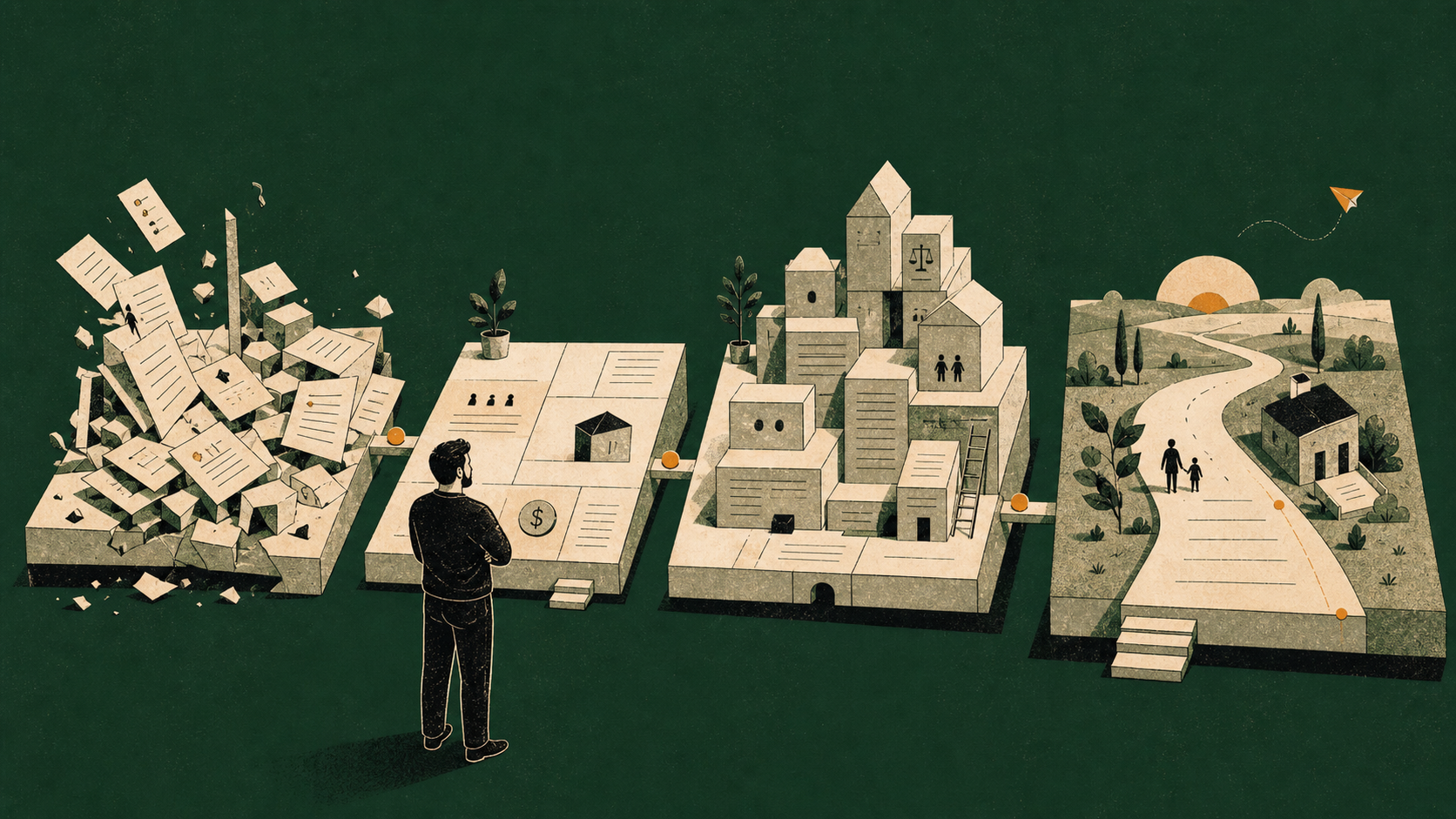
There are four phases. They don't have fixed timelines. Some people move through them in eight months. Others take three years. A few oscillate — returning to an earlier phase when something external pushes them back. Knowing which one you're in tells you what to focus on and what to leave alone.
Phase 1: Survive
You’re in Survive if you’re still managing immediate problems as they emerge. You’re not ahead of anything. You’re reacting. Sleep is disrupted. The financial picture is unclear or actively alarming. Decisions feel large and irreversible. You might be in temporary accommodation. The legal situation hasn’t settled. Kids are unsettled.
This phase has one job: keep the wheels on.
Two goals maximum. Not ten. Not a rebuild plan. The question isn't "what do I want my life to look like in three years?" The question is "what are the two most important things I need to stabilise this week?" Everything else waits.
The error in Survive is ambition. People in this phase often want to fix everything at once: the finances, the fitness, the co-parenting relationship, the living situation, the legal process, the new identity, the new life. It makes sense. Fixing everything feels like control.Pick two things. Hold them. Let everything else stay messy for now.
Phase 2: Stabilise
Stabilise begins when the immediate fires are out. You're sleeping more consistently. You know roughly what money you have and what you need. There's a parenting schedule that mostly works. You've had the legal consultation and have some sense of timeline. You're not happy — this phase is rarely happy — but you're no longer in reactive mode.
The job of Stabilise is to cover every essential area with a minimum viable commitment.
One goal per area. Money: a budget you're roughly holding to. Kids: a rhythm that works without constant renegotiation. Housing: somewhere you can stay for at least six months. Physical: something you're doing three times a week. Legal: a process that's moving. That's it. One thing per area. Not optimised. Covered.
The error in Stabilise is trying to move too fast. People who feel the relief of getting out of the Survival phase want to immediately rebuild — new fitness goals, new financial goals, new relationship, new business idea. That's understandable. It's also premature. Stabilise is consolidation. Build the floor before you raise the ceiling.
Phase 3: Rebuild
Rebuild starts when the basics hold without active effort. The budget runs without weekly crises. The parenting schedule is smooth enough that you're not thinking about it constantly. Sleep is mostly normal. You have enough mental bandwidth to look up from the immediate.
Now you can add stretch.
Rebuild is where real goals return. Not the survival goals of Stabilise — the aspirational goals. A savings target. A fitness progression. Work ambitions. The beginning of longer-horizon planning. You can think in quarters instead of weeks.
The error in Rebuild is complacency. People assume that because things are stable, the work is done. It isn't. Rebuild requires deliberate effort in a different direction — not maintaining the basics, but raising the floor. The basics still need to hold. You're just doing more than holding now.
Phase 4: New Chapter
New Chapter is the phase most separation content wants to start with. "Your new life." "Starting fresh." "The opportunity in this."
The reason that advice is useless in Survive or Stabilise is that it's only true in Phase 4. You can't build a new chapter while you're still putting out fires. By the time you're here, though, it's accurate: you're planning in years, not weeks. The decisions you're making are strategic, not reactive. You can look back at the separation with some clarity.
The job of New Chapter is horizon. What do you actually want your life to look like now — and what decisions, made now, serve that future rather than just the present?
The error in New Chapter is pretending you never went through the other phases, or skipping the reflection that makes Phase 4 useful. What you learned in Survive about what you can hold. What you built in Stabilise that actually works. What you let go in Rebuild that you thought you needed. All of that is the foundation. New Chapter doesn't erase the other phases — it's built on them.
How to tell which phase you're in
Four diagnostics. Rate each one on a simple scale — not a number, just: struggling, okay, or solid.
Sleep. If you're reliably getting six or more hours and waking without the immediate flood of anxiety, that's one marker that you're out of the Survive phase.
Money. If you know what you earn, what you spend, and what the gap is — and you're not surprised by your bank balance — you're in Stabilise or beyond.
Kids. If the schedule runs without weekly negotiation and the kids are settled enough to be kids rather than anxious, you're out of the Survive phase.
Energy. If you have enough spare capacity to want something — to plan something, to look forward to something — you're in Rebuild or beyond.
Struggling across all four: Survive. Okay across most: Stabilise. Solid across all, with capacity to reach: Rebuild. Planning in years and looking forward: New Chapter.
Open Atlas Goals tool and set your current phase so your next steps match the season you are actually in.
The most common mistake
People in the Survive phase who are trying to act like they're in Rebuild. They set ambitious goals, make big decisions, start new things — and then crash when the structure can't hold it. The crash isn't failure. It's a phase mismatch.
And its mirror: people in Stabilise who refuse to admit they're still there. They've been "rebuilding" for eighteen months, they say. But the basics are still wobbling. The floor isn't solid. They keep trying to raise the ceiling from an unstable foundation and wondering why it doesn't hold.
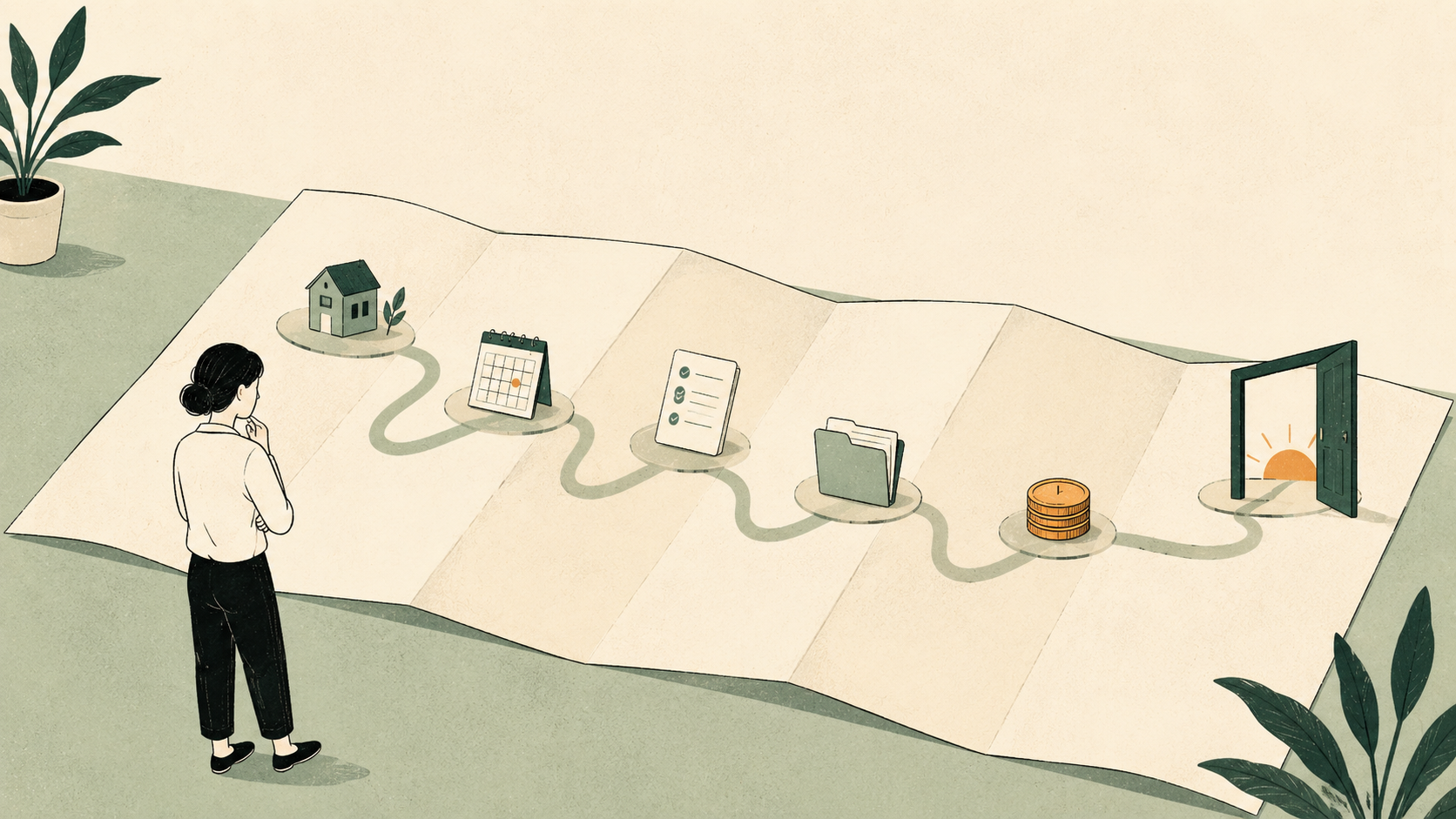
The phase model isn't a judgment. It's a map. Most maps tell you where you are, not how fast you should be moving.
Know your phase. Match your goals to it. Let the next phase come when it comes.
Atlas is built around this framework. The dashboard gives you a view of where you are across the four areas — money, kids, legal, and personal — so you can see your own phase clearly rather than guessing. It's free. Your data stays on your device.
Use it to find your floor. Everything gets built from there.
If you are not even at crisis yet, read The Waiting Room next.