Quick answer
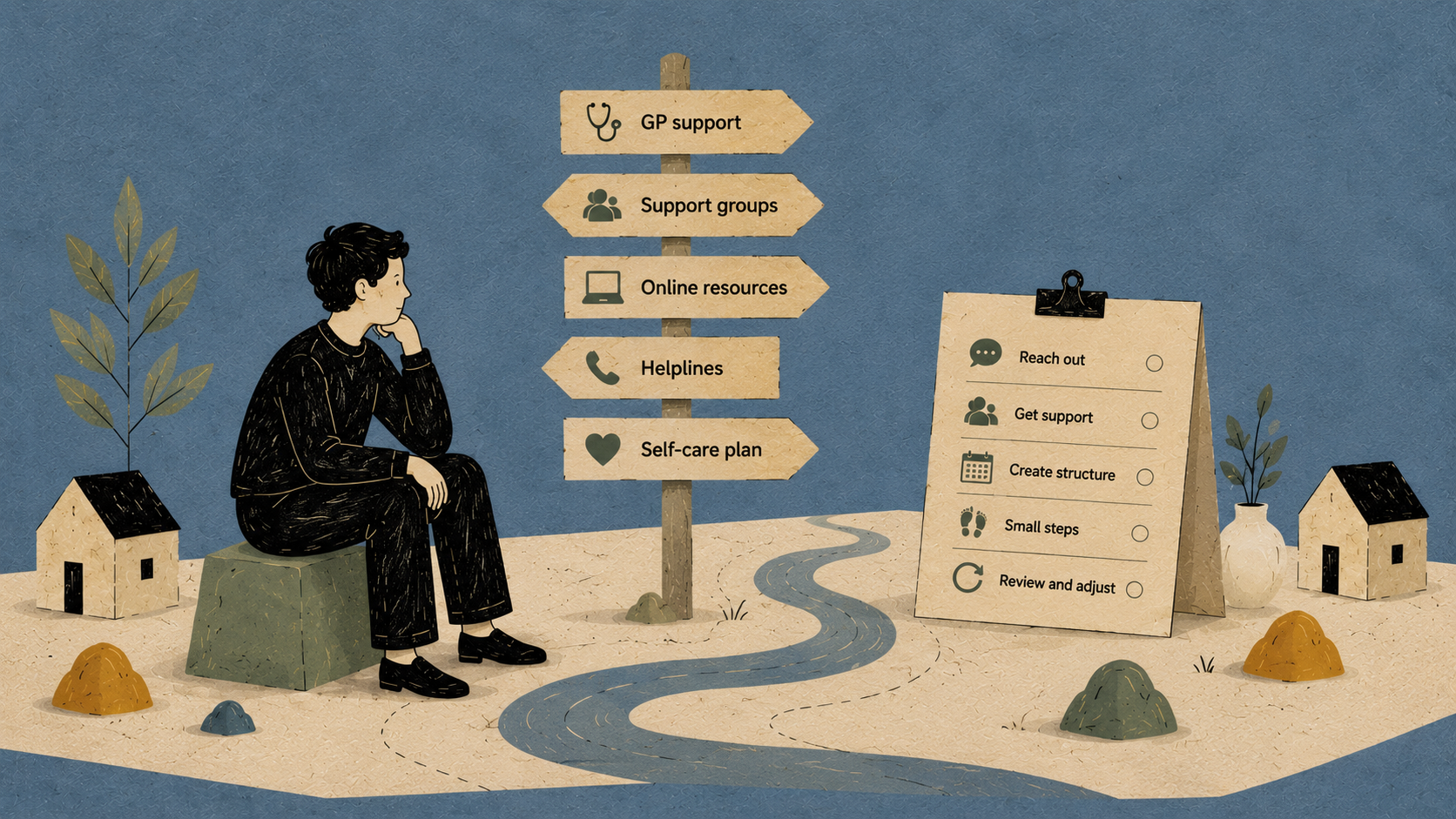
If you cannot get a psychologist quickly, build an interim system:
- book or revisit your GP
- ask about a Mental Health Treatment Plan and other referrals
- use Medicare Mental Health, Medicare Mental Health Check In, Beyond Blue or Lifeline where appropriate
- contact 1800RESPECT if violence, coercive control or safety is part of the situation
- reduce alcohol, sleep damage and isolation
- put one support conversation in the calendar each week
A waiting list is not support. Build the bridge.
The referral is not the finish line
You finally ask for help. The GP writes the referral. You call three psychologists. Two books are closed. One can see you in nine weeks with a gap fee that looks like a car repayment.
This is where people give up.
Do not give up. Change the problem.
You are not trying to replace therapy. You are trying to stay stable until therapy exists.
For the GP referral route, read the GP appointment after separation.
Step 1: go back to the GP
Tell the GP the referral did not convert into an appointment.
Ask:
- Are there other clinicians with availability?
- Is a social worker or mental health nurse appropriate?
- Are there local services through the Primary Health Network?
- Should medication be discussed?
- What should I do if things get worse?
- Can we book a follow-up now?
Do not disappear because the first door was closed.
Step 2: use no-referral services
Medicare Mental Health offers free support for people in Australia, including a national phone service on 1800 595 212 on weekdays. Medicare Mental Health Centres can be accessed without an appointment or GP referral, but availability and service type vary by location.
Also check Medicare Mental Health Check In. It provides free guided digital support for people in Australia, with no referral or diagnosis needed. It is not a replacement for crisis care or therapy, but it can be useful while you are waiting.
Beyond Blue offers free phone and online counselling.
Lifeline provides 24-hour crisis support.
If domestic, family or sexual violence is involved, 1800RESPECT is available 24/7.
If you are in immediate danger, call 000.
Step 3: build the daily floor
Your interim system needs a daily floor:
- wake time
- shower
- food before coffee number three
- 20-minute walk
- no alcohol on work nights if it is making sleep worse
- one message to a sane person
- phone out of bedroom
- write the next day’s first task before bed
This is not a productivity routine. It is scaffolding.
Step 4: use the right friend for the right job
Not everyone can hold the same information.
Pick:
- one practical friend
- one listener
- one person who can help with kids or logistics
- one professional support option
Do not make the most reactive friend your crisis department.
Common mistakes
Waiting silently
Waiting lists are passive. You need active supports around them.
Using alcohol as anaesthetic
It works for about three hours. Then the invoice arrives in sleep, anxiety and parenting patience.
Treating online advice as care
Reading forums can make you feel less alone. It can also turn your nervous system into a haunted printer. Use sparingly.
Cancelling the GP follow-up
Book it anyway. You can cancel later if you genuinely do not need it.
The practical next step
Make three calls:
- GP follow-up.
- One no-referral support service.
- One person who can check in this week.
Then put the appointments in the calendar.
Support that is not scheduled is often just a nice idea.
Sources and resources
Last checked: 20 May 2026.
This article is general information, not legal, financial or medical advice. Check the current rules before acting on anything money, court or health related. If there is family violence, coercive control, risk to children, urgent housing risk or court orders in place, get professional advice before relying on a checklist.
- https://www.servicesaustralia.gov.au/mental-health-care-and-medicare?context=60092
- https://www.health.gov.au/our-work/better-access-initiative
- https://www.medicarementalhealth.gov.au/
- https://www.medicarementalhealth.gov.au/finding-help/medicare-mental-health-services
- https://www.medicarementalhealthcheckin.gov.au/
- https://www.beyondblue.org.au/get-support/talk-to-a-counsellor
- https://www.lifeline.org.au/
- https://1800respect.org.au/