Quick answer
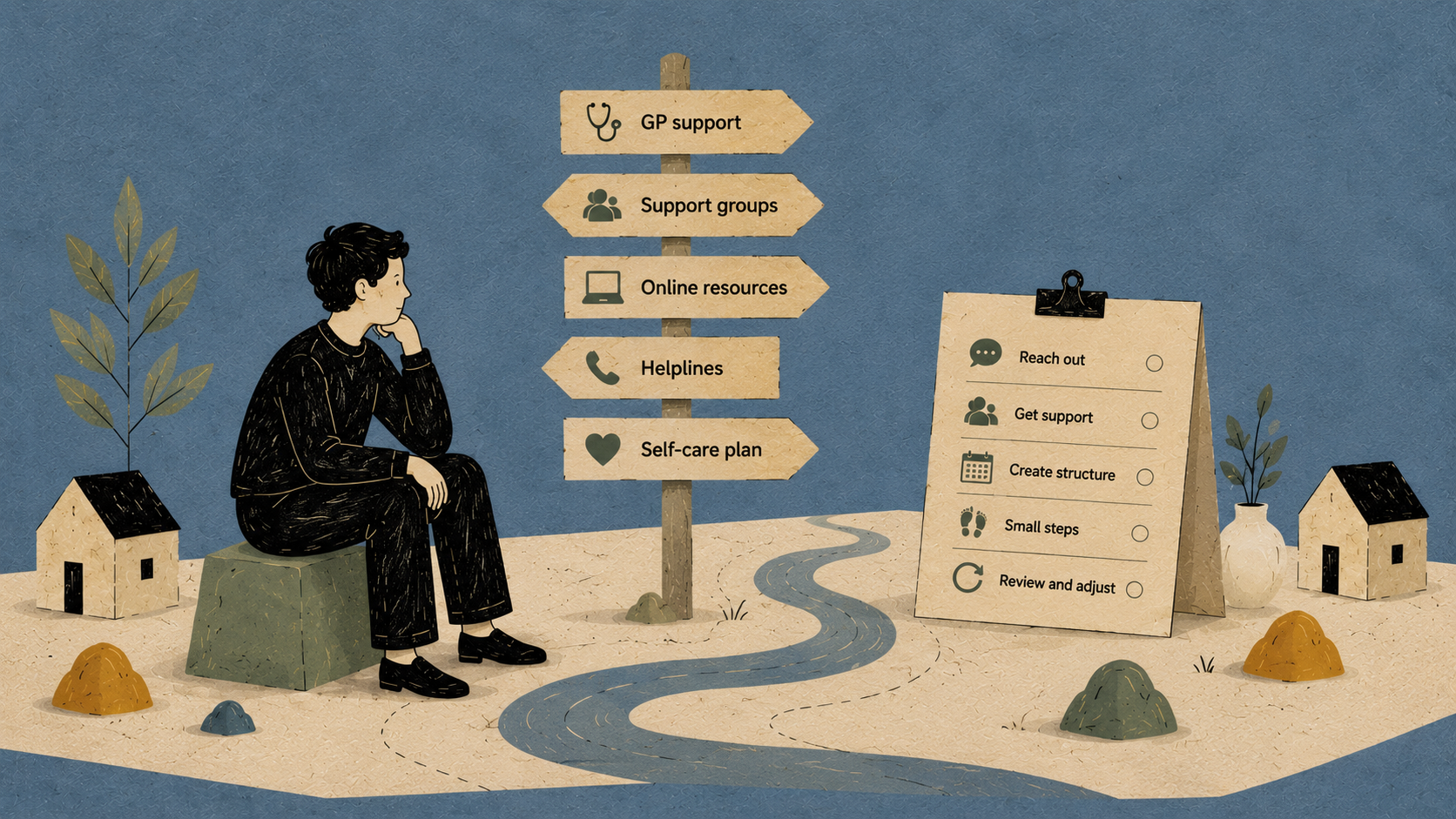
A GP can help after separation with:
- a mental health assessment
- a Mental Health Treatment Plan where appropriate
- referrals to psychologists, social workers or other clinicians
- sleep, anxiety and medication conversations
- medical certificates if work is affected
- safety planning and family violence referrals
- documenting health impacts in your record
You do not need a perfect speech. You need one honest appointment.
The appointment you avoid booking
You can keep working. You can keep parenting. You can answer emails. You can make lunches. You can look fine at the school gate.
Then you sit in the car outside Coles and realise you have been holding the steering wheel for eight minutes.
That is enough reason to see your GP.
Not because you are broken. Because your system is overloaded and the family doctor is one of the few doors that can open several other doors.
What to say when you get there
Say it plainly:
“I have separated. I am not sleeping properly. I am anxious most days. I need help working out the next practical step.”
That is enough.
If there is family violence, coercive control, threats, stalking or technology abuse, say that too. If you do not feel safe saying it out loud, write it on your phone and show them.
What a Mental Health Treatment Plan is
A Mental Health Treatment Plan is prepared by a GP or other eligible doctor when clinically appropriate. It is not just a referral slip because separation is hard. Your GP assesses what is going on and, if appropriate, prepares a plan that can let you claim Medicare benefits for sessions with eligible mental health professionals.
Current Australian Government guidance says eligible patients can claim up to 10 individual and 10 group mental health treatment services per calendar year under Better Access.
Usually, your doctor refers you for up to 6 sessions first. If you need more, they decide whether to refer you for further sessions, up to the calendar-year limit. You need to be eligible and have a valid referral.
That does not mean every session is free. Many clinicians charge more than the Medicare rebate. Ask about the gap before you book.
For the Centrelink and payment side of things, read Family Tax Benefit, Centrelink and Parenting Payment. Money stress and mental health rarely stay in separate rooms.
What your GP can actually do
1. Assess what is going on
This can include anxiety, depression, panic symptoms, sleep problems, grief, stress, alcohol use, appetite changes and whether you are safe.
Do not polish the answer. The polished answer wastes the appointment.
2. Build a treatment plan
The GP may prepare a plan, refer you to a psychologist, social worker or other eligible professional, or suggest other supports.
If you cannot find a psychologist quickly, read what to do when you can’t get a psychologist. The waiting list is not a plan. It is a queue.
3. Talk about sleep
Sleep is not a wellness detail. In separation, poor sleep turns every message into a threat and every bill into a verdict.
Tell the GP:
- how many hours you sleep
- whether you wake early
- whether you are using alcohol to sleep
- whether you are driving tired
- whether you are having panic symptoms
4. Help with work
If you need time off, reduced hours or a medical certificate, ask directly.
You do not need to tell your workplace everything. You may need to tell them enough. Read how to explain separation to your workplace if that conversation is coming.
5. Point you to immediate support
For crisis support, services like Lifeline, Beyond Blue, 1800RESPECT and Medicare Mental Health may be relevant depending on what is happening. Medicare Mental Health also includes a national phone service and digital early-support options, but it is not a substitute for emergency care.
If you are in immediate danger, call 000.
What to bring
Bring boring facts:
- current medications
- alcohol or drug use if relevant
- sleep pattern
- appetite changes
- panic symptoms
- work impact
- safety concerns
- current counsellor or psychologist details if any
- what you have already tried
- whether you need documents for work
You can also bring one sentence:
“I am functioning, but not well.”
That sentence does a lot.
Common mistakes
Mistake 1: waiting until you collapse
The GP is useful before the wheels leave the road.
Mistake 2: asking only for a referral
A referral can help. But the appointment can also cover sleep, safety, work, medication, alcohol, physical symptoms and follow-up.
Mistake 3: hiding the ugly bit
If you are drinking more, yelling more, not sleeping, obsessively checking messages or feeling unsafe, say it. The GP cannot treat the public version of you.
Mistake 4: assuming the first referral will work
Sometimes the first psychologist has no availability. Sometimes the gap fee is impossible. Sometimes the fit is wrong. Ask the GP for alternatives and interim options.
The practical next step
Book the appointment. Ask for a long consult if you can.
Write three bullets before you go:
- What has changed since separation.
- What is not working.
- What help you want first.
Then hand the bullets over if words fail. That counts.
Sources and resources
Last checked: 20 May 2026.
This article is general information, not legal, financial or medical advice. Check the current rules before acting on anything money, court or health related. If there is family violence, coercive control, risk to children, urgent housing risk or court orders in place, get professional advice before relying on a checklist.
- https://www.servicesaustralia.gov.au/mental-health-care-and-medicare?context=60092
- https://www.health.gov.au/our-work/better-access-initiative
- https://www.medicarementalhealth.gov.au/finding-help/medicare-mental-health-services
- https://www.lifeline.org.au/
- https://www.beyondblue.org.au/get-support/talk-to-a-counsellor
- https://1800respect.org.au/
- https://www.healthdirect.gov.au/mental-health-treatment-plan