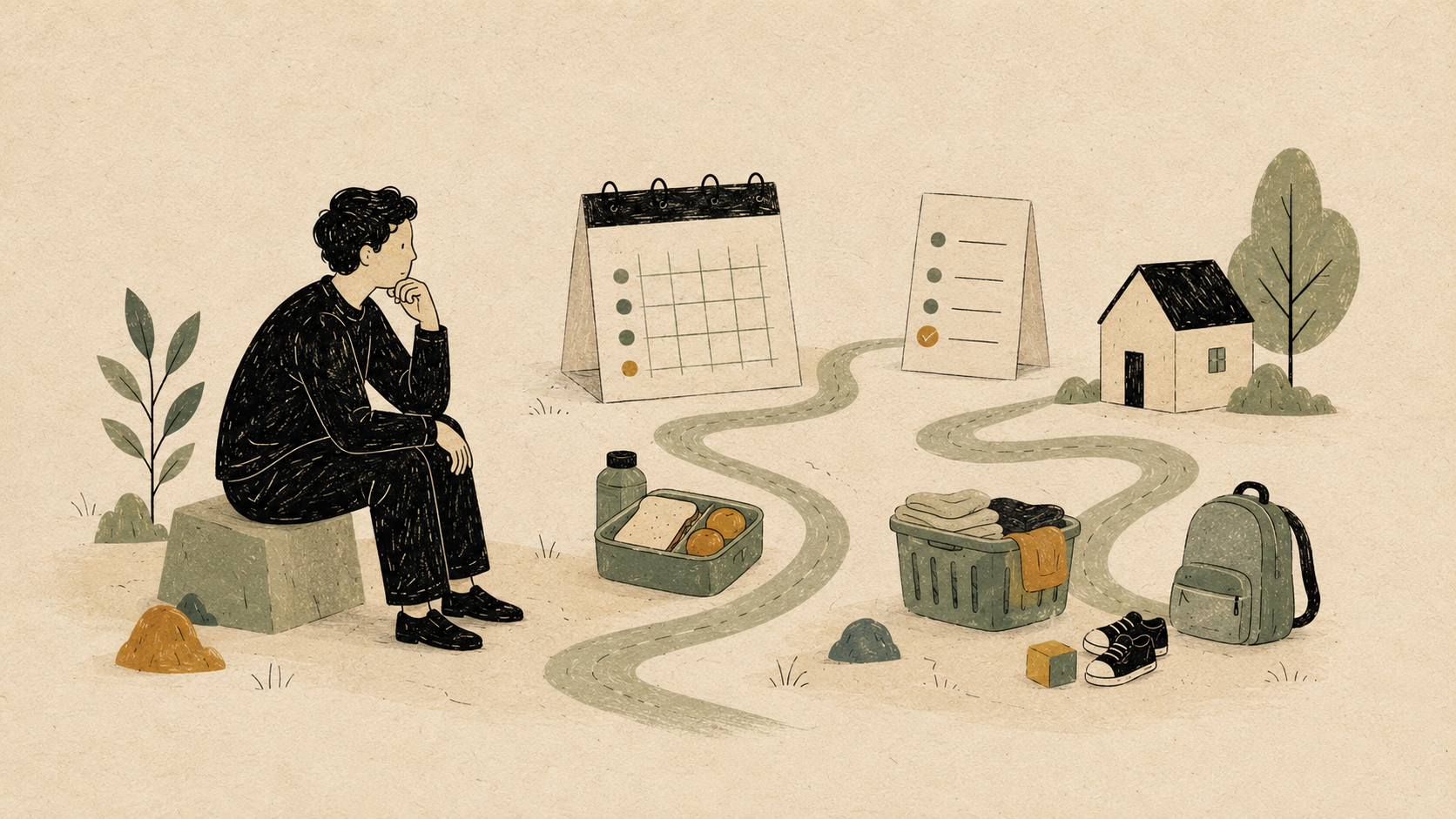
Everyone tells you the schedule. Week on, week off. Five days with you, five days with her. It sounds manageable when it's written in a parenting plan. It's different when you're standing in the school car park on a Wednesday morning and your daughter doesn't have her recorder and it's at the other house and it's already 8:47.
This piece is not about the emotional side of 50/50 parenting. That's real and it's yours to work through. This is about the operational side — the logistics that make the schedule liveable or grind it into something you dread. Two homes, two sets of kids, five days per cycle. Here's what actually helps.
The packing problem
In the early months, packing is how everything falls apart.
Kids lose things. They forget things. They leave the one thing they desperately need at the other house and realise at 9pm. You spend twenty minutes texting an ex you're not ready to text calmly, over a library book.
The solution isn't better packing. It's buying two of everything you can afford to.
This feels extravagant until you price out the alternative — the time, the friction, the arguments, the logistics tax of running one set of stuff across two addresses. Two school bags. Two sets of pyjamas. Two phone chargers. Toothbrushes and toothpaste at both houses. Art supplies, basic medicine, an extra school hat. Not everything — but the things that travel badly or get forgotten reliably.
Keep a short physical list at both houses of what actually needs to move with the kids each handover. Not a full bag inventory — just the five things that matter. Lunch box, reader, medication, sports bag if it's that week, any item that belongs to the school. Everything else lives at whichever house it lives at.
The handover
The handover is the most loaded five minutes of your week. Everything you haven't resolved will surface there if you let it.
In many families, morning handovers work better than evening ones. The practical logic is simple: both parents are task-focused in the morning. The kids are in school mode. There's somewhere to be and a reason to end the interaction. Evening handovers are tired, unstructured, and long. They're where small things become big things.
If you can get school to be the handover point — drop off on your last morning, pick up on her first afternoon — do that. It removes the doorstep entirely. Kids don't have to watch two parents work out how to be in the same driveway. They just go to school and come home to a different house.
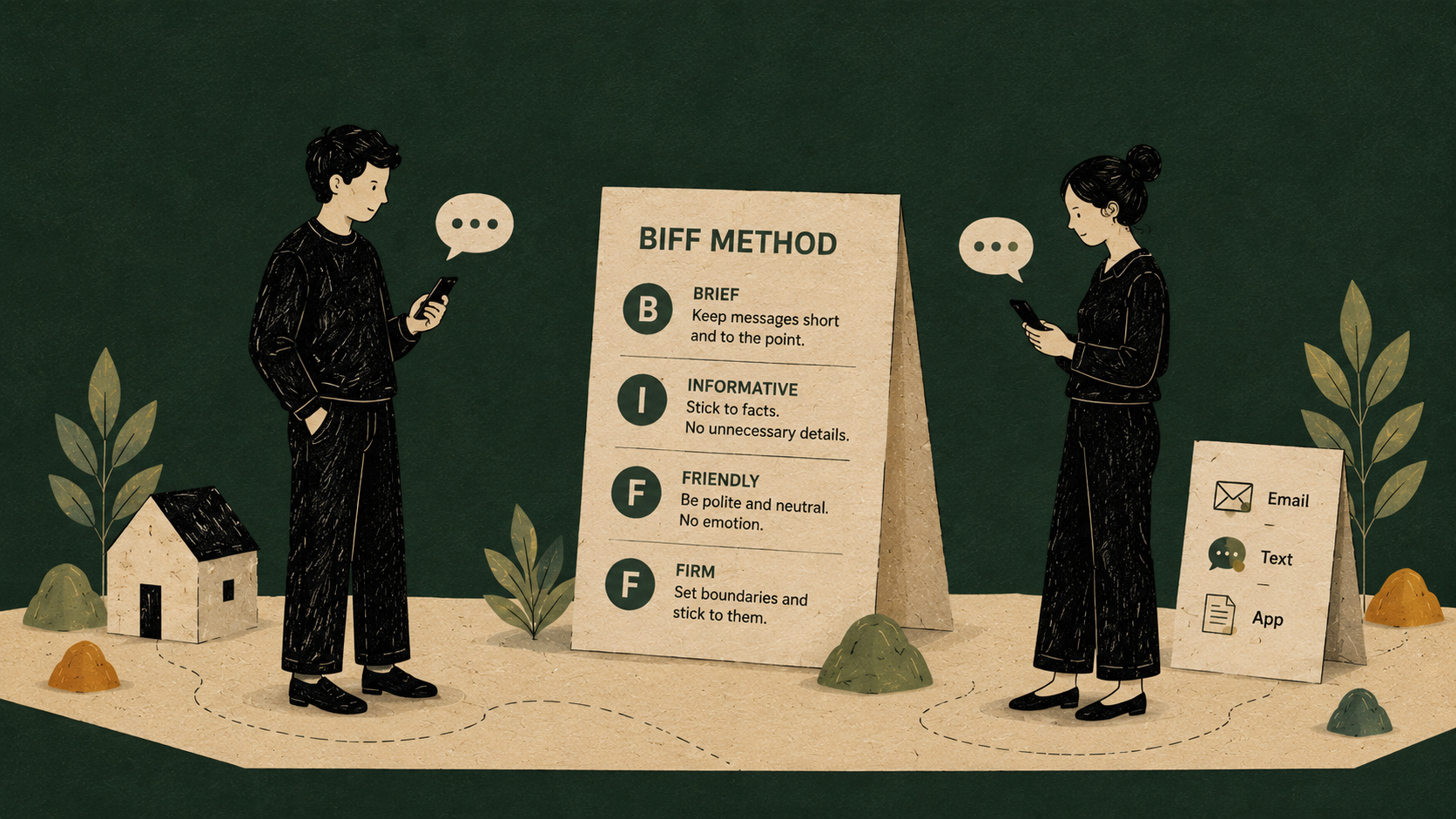
If a direct handover is unavoidable, keep it to five minutes. Same script every time: "Good week?", quick note on anything the other parent needs to know (doctor's appointment, spelling test, mood), done. Don't solve anything at the handover. That's what texts are for.
For the wider parenting/legal context, read the 2025 family law changes guide.
The ghost week
The first time your kids go to the other house for a week, you will not know what to do with yourself.
The house is too quiet. The absence is physical. You'll check your phone for no reason. You'll walk past their rooms. If you're not expecting it, it can tip into something that looks like depression — and for some people, it does.
This is common and it's worth preparing for, not just weathering.
Use the first ghost week to do something concrete that you can't do when the kids are there. Not to fill the void — to give yourself a reason to be glad of the time that doesn't feel like a betrayal. Sleep. See a friend properly. Train more than usual. Start the thing you've been putting off. The goal isn't to enjoy it. The goal is to function and, over time, find a version of the week-off that you can actually use.
The ghost week feeling softens. It doesn't disappear entirely. But most dads find that after three or four cycles it becomes something closer to reset than loss.
Calendars: one source of truth
Two separate Google Calendars that you both edit separately is how pickups get missed.
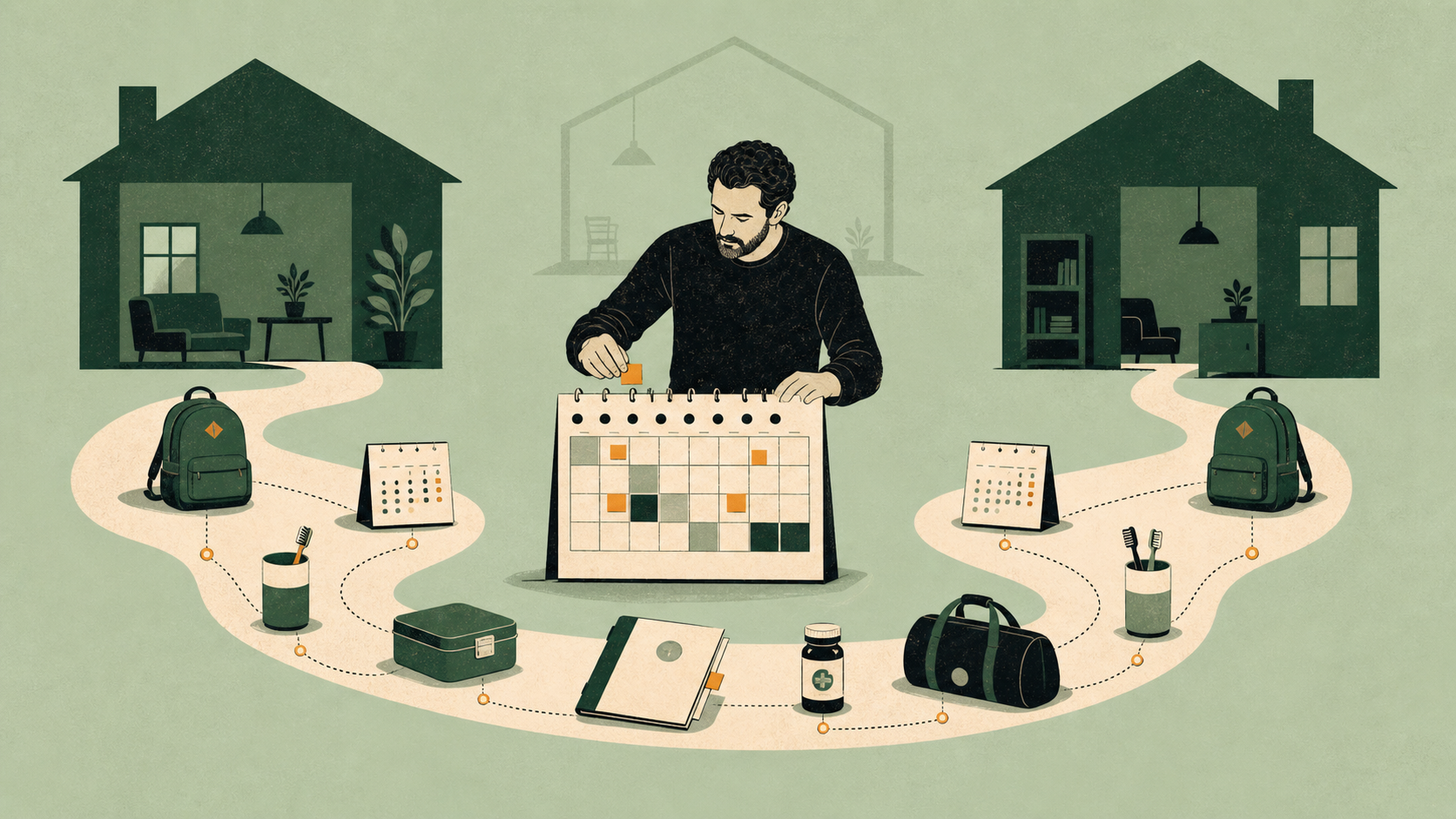
You need one shared calendar — a single source of truth for school events, sports, medical appointments, and the handover schedule. Not a conversation. Not texts. A calendar both of you can see and that the kids can reference on a device if they're old enough.
OurFamilyWizard is purpose-built for this. It has a shared calendar, a message log, and an expense tracker, and it creates a record in case things ever get legal. If your relationship with your ex is functional, a shared Google Calendar works fine. The tool doesn't matter. The single-source-of-truth principle does.
Whatever you use: put everything in it. Every event, every pickup, every school day that isn't standard. If it's not in the calendar, it doesn't exist.
Build your actual handover rhythm in the Atlas Kids Week tool, including school gear, meals, screen time and reminders.
The mental load
The thing that doesn't show up in parenting plans is mental load — the ongoing background processing of knowing what's happening when, what needs to be bought, who needs to be called, which form is due.
In a coupled household, mental load is usually distributed unevenly. In a separated household, it's split by week and you carry all of it during your week.
The fix is the same as it is in every other part of separation: write it down.
A running list per week. Not elaborate — a note on your phone. This week: dentist Tuesday, school photo Thursday, permission slip for swimming, need more Panadol. The list gets the information out of your head and into somewhere you can look at without effort. The 11pm panic — "did I sign that form?" — is almost always a symptom of trying to hold too much mentally rather than a real emergency.
Atlas's kids-week view keeps this in one place — the schedule, the logistics, the things that move. Or use whatever you'll actually open. The tool doesn't matter. Getting it out of your head does.
What makes it liveable
Not a perfect parenting plan. Not a high-functioning relationship with your ex — helpful if you can manage it, but not necessary. What makes 50/50 liveable is mostly logistics hygiene.
Two of the essential things. Morning handovers. A calendar both of you can see. A list that lives outside your head. And a plan for the ghost week that doesn't just leave you staring at the ceiling.
Sort the systems. Then let them run.