Quick answer
If your ex cuts off communication entirely:
- stop chasing through ten channels
- choose one clear written channel
- send factual, child-focused messages
- document contact attempts
- keep making necessary day-to-day decisions
- get legal advice if orders, safety or major decisions are involved
- consider court or dispute resolution pathways where needed
Silence is not a system. You need one.
The silence creates its own noise
No reply about pickup.
No reply about school camp.
No reply about medication.
No reply about the dentist, the bill, the handover time, the thing that clearly needs two adults and has somehow become a hostage situation.
The trap is panic. Panic makes you send six messages in six styles.
Do not do that.
Start a communication record immediately
Use Atlas Admin to maintain a clear record of contact attempts, responses and decisions you are making without agreement.
Record:
- date and time
- channel used
- topic
- exact request
- deadline given
- response or no response
- decision made
- why it was necessary
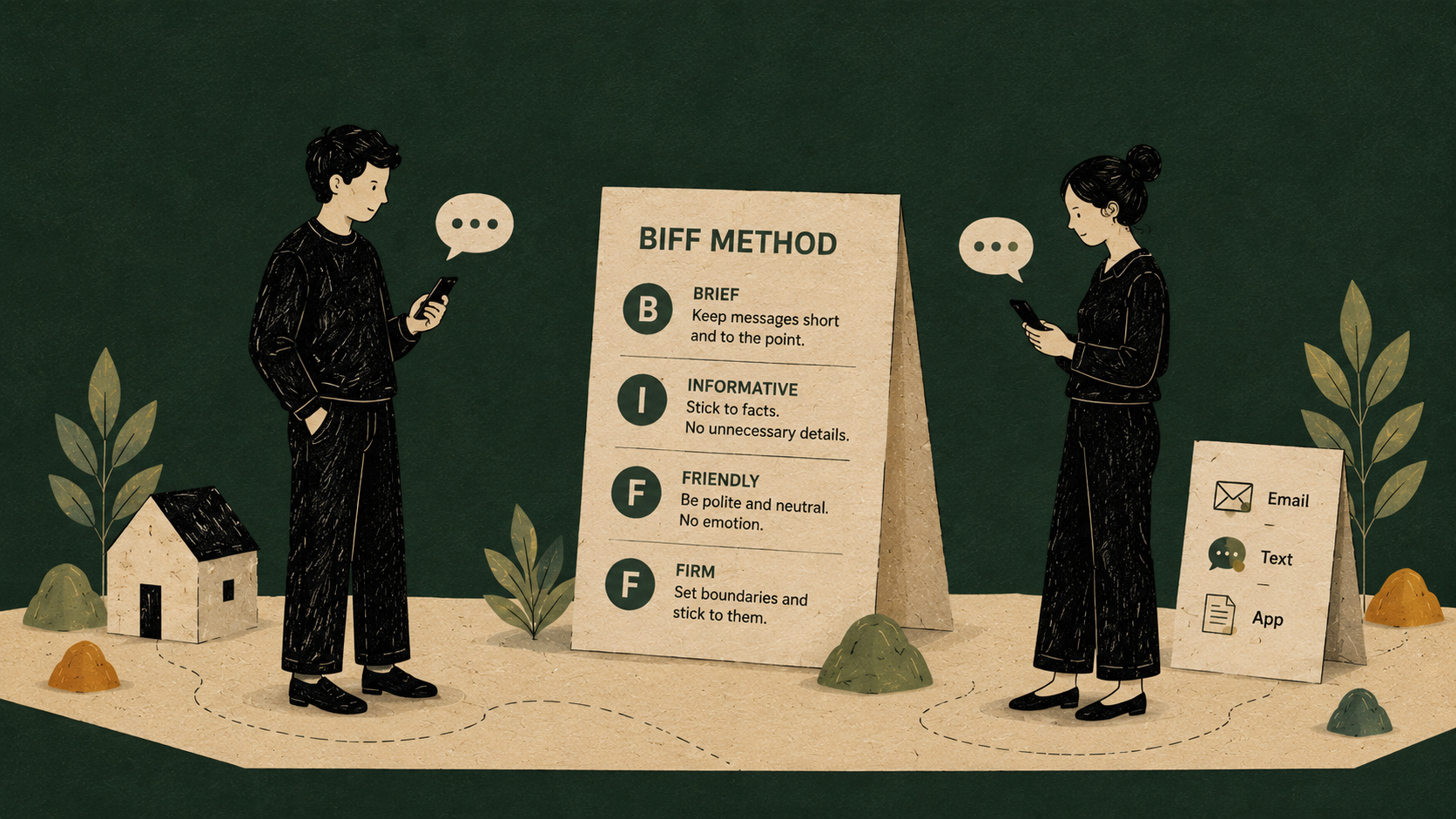
For low-trust message structure, read the BIFF guide.
Choose one channel
Pick the least chaotic written channel:
- co-parenting app
- text if that is all you have
Then write:
“For parenting communication, I’ll use this email address. I’ll keep messages about the children, school, health, handover and expenses. Please reply here so we both have a clear record.”
Then use it consistently.
What you can decide alone
This depends on your orders, plan, agreement and the type of decision.
Day-to-day decisions during your care time are different from major long-term decisions like schooling, religion, major medical decisions or relocation. Australian family law encourages separated parents to consult each other about major long-term issues where it is safe to do so, and the best interests of the child remain the central consideration.
If you are unsure, get legal advice. Do not let silence trick you into making a major decision that creates a bigger problem.
When to escalate
Escalate when:
- children’s safety is affected
- orders are being breached
- major decisions are blocked
- school or medical needs cannot be handled
- communication failure is persistent
- silence is being used as control
For the legal escalation path, read going to family court for the first time.
What not to do
Do not spam
One clear message beats seven increasingly irritated ones.
Do not use the child as messenger
Children are not courier pigeons with school hats.
Do not make threats
Write the next practical step, not the legal trailer.
Do not pretend silence is agreement
No response is not always consent. Be careful with major issues.
The practical next step
Send one clean message:
- topic
- facts
- requested response
- deadline
- what you will do if no response is received
Example:
“School camp payment is due Friday. The total is $240. Please confirm by Wednesday 5pm whether you agree to split this 50/50. If I don’t hear back, I’ll pay it so the deadline is met and keep the receipt for later discussion.”
Boring. Factual. Useful.
Sources and resources
Last checked: 20 May 2026.
This article is general information, not legal, financial or medical advice. Check the current rules before acting on anything money, court or health related. If there is family violence, coercive control, risk to children, urgent housing risk or court orders in place, get professional advice before relying on a checklist.