The letter from Services Australia arrives and the number is wrong. Not wrong in a clerical sense — wrong in a "that can't be right" sense. Too high if you're paying. Too low if you're receiving. Either way, you didn't see it coming because nobody explained how the calculation actually works. They just sent you a number.
This is that explanation. The formula, in plain language. What goes in, what comes out, and where people miscalculate it.
Use the free Child Support Calculator tool to get an estimate of child support.
The income figure is not what you think
Child support is not calculated on your take-home pay. It's not calculated on your salary package. It's calculated on something called your adjusted taxable income — and for a lot of people, that number is meaningfully different from what lands in their bank account.
Adjusted taxable income includes your taxable income plus any reportable fringe benefits (novated lease, car allowance), any reportable employer super contributions above the standard rate, and any net financial investment losses. If you salary sacrifice into super, that reduces your taxable income but Services Australia may add it back. If you have a rental property running at a loss, that loss may be included.
This catches people off guard in both directions. Someone with a $120,000 salary who salary sacrifices $15,000 into super might assume their income for child support purposes is $105,000. It isn't. It's likely closer to $120,000. Get the right number before you estimate anything.
Source: How we use adjusted taxable income — Services Australia
How the formula actually works
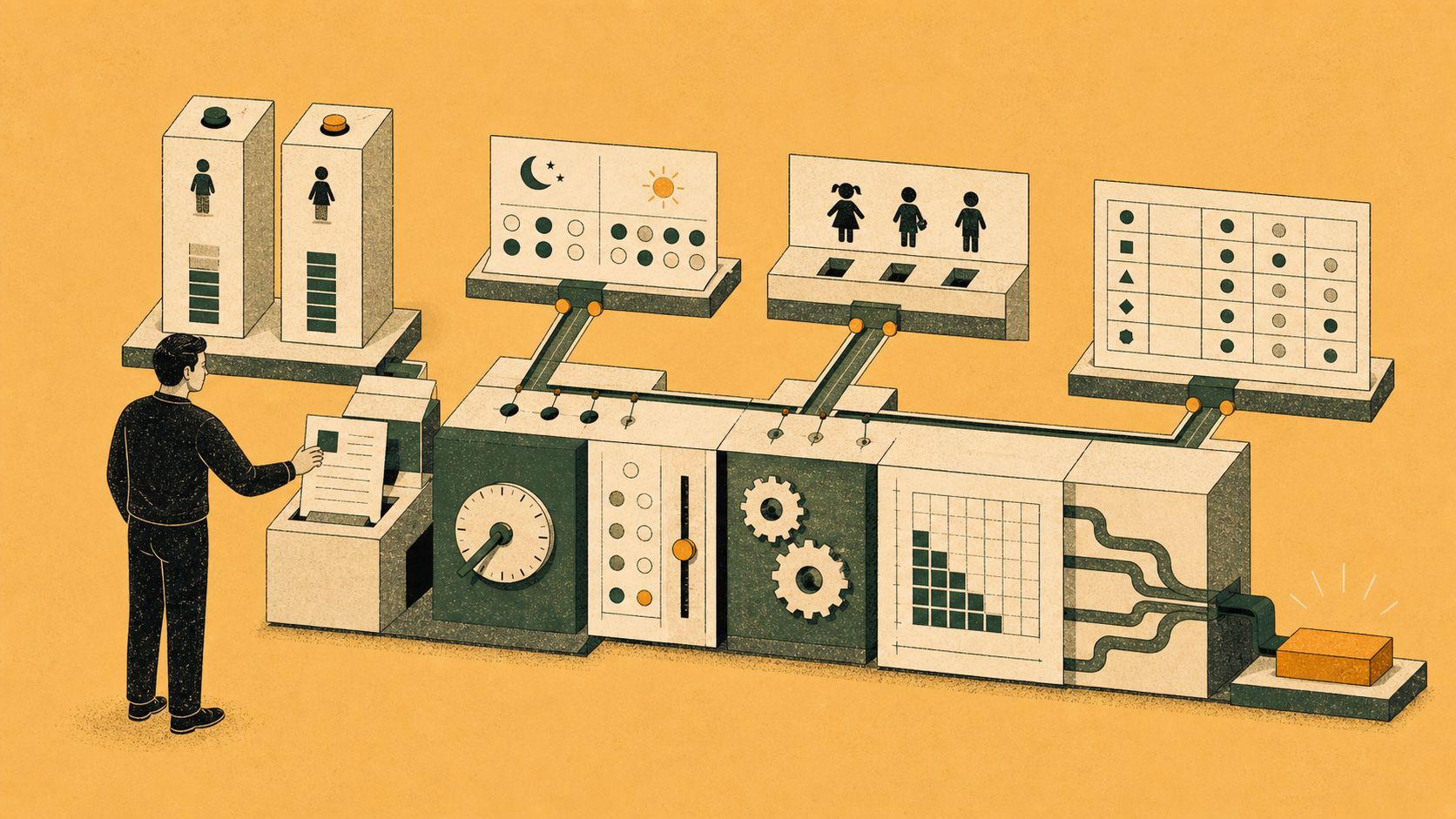
Services Australia presents the basic formula as eight steps. In plain English, it works by comparing each parent's child support income, their share of care, and the estimated costs of the children — then converting that into either a payable amount or no payable amount.
Here's the logic, stripped back.
First, Services Australia works out each parent's child support income. That starts with adjusted taxable income, then subtracts the self-support amount — a fixed figure updated annually, currently $31,046 (2026) — representing what it costs each parent to support themselves. Only income above that threshold counts toward the assessment. Don't use last year's figure as your benchmark; check the current amount on the Services Australia website before you estimate anything.
Second, both parents' child support incomes are combined. Each parent's share of that combined figure — their income percentage — determines their baseline share of the children's costs.
Third, the care percentage is applied. Each night the children spend with you counts toward your share of care. The more time you have, the lower your liability — but only once you cross certain thresholds. Care between 14% and 34% of nights attracts a partial reduction. Care at 35% or above gets a more significant reduction. At equal or near-equal care, the cost percentage shifts — but it doesn't automatically cancel child support. The formula still compares each parent's income percentage against their care percentage.
Fourth, a cost of children table — based on the combined parental income and number of children — determines the total notional cost. Your share of that cost, adjusted for your care percentage, is your assessment.
If either parent's income changes significantly, the assessment can be updated. This isn't automatic. You have to notify Services Australia.
Source: The child support assessment formula — Services Australia
The income cap — and why high earners hit a ceiling
The formula has a hard ceiling built into the costs of children table. Once the combined child support income of both parents exceeds 2.5 times the Male Total Average Weekly Earnings (MTAWE), the notional cost of the children stops increasing. For 2026, that combined cap sits at $232,843. Any income above that — whether it belongs to one parent or both — produces no additional cost in the formula's calculation.
This surprises people in both situations. The high-earning payer assumes the number will be enormous. The receiving parent assumes they'll finally get an amount that reflects the other parent's actual income. Neither is right under the standard assessment.
The cap exists because the costs table is based on research into how much parents actually spend on children at different income levels. At a certain point, additional income doesn't meaningfully change spending on children — so the formula stops tracking it. It's updated annually in line with MTAWE, so the figure changes each financial year.
What this means practically: if one parent earns well above the average wage, the standard Services Australia assessment has a ceiling. The receiving parent won't get more than what the capped formula produces — unless a binding child support agreement is negotiated that sets a higher amount. That requires independent legal advice for both parties and formal registration. More work, but it's the only mechanism that captures income above the cap.
If you're using an online calculator and the number looks unrealistically high, check whether it's applying the income cap correctly. The Atlas calculator reflects the correct 2026 figures.
Source: Basic values, costs of children tables — Services Australia operational guide
The 50/50 myth
Equal time does not mean zero child support. This is the most persistent and most expensive misunderstanding in the system.
At exactly 50/50 care, the formula looks at the income difference between both parents. If you earn more, you pay the lower-earning parent the difference between your respective shares of the child cost. The payment reduces significantly compared to lower care percentages, but it doesn't disappear.
In practice: with equal care and a meaningful income gap — say, $100,000 versus $60,000, two children — the higher earner may still pay around $400 per month based on current formula settings. The exact amount depends on both adjusted taxable incomes, the children's ages, the care percentage, and the costs-of-children table, which is updated annually. Not zero. And if the income gap is larger, the payment is larger.
Run the numbers before any custody negotiation. Assumptions about what 50/50 means financially have derailed agreements that were otherwise sensible.
Source: Basic child support formula — Services Australia
What the formula doesn't cover
The child support assessment covers ordinary costs of raising children — food, clothing, housing, basic activities. It does not cover everything, and the gap is where most post-assessment conflict occurs.
School fees are outside the assessment unless they were explicitly included in a binding agreement. Same with private health insurance premiums, orthodontic treatment, tutoring, sport fees, school camps, and overseas travel costs for the children.
These costs may need to be dealt with separately — either by agreement or through a formal child support agreement. Don't assume the standard assessment automatically settles them. In practice, they're rarely agreed on in advance and frequently argued over after the fact. Get them written down early, before the first school fee invoice arrives.
Private agreements and how to register them
You don't have to use Services Australia's formula. You can make a private agreement with your ex for a different amount — higher, lower, or structured differently. Many people prefer this because it avoids the bureaucratic overhead of the agency.
But an unregistered private agreement is unenforceable. If either party stops paying or changes the terms unilaterally, you have no mechanism to compel compliance without starting over.
A limited child support agreement requires both parties to agree, must be at least equal to the formula amount, and generally requires a current Services Australia assessment already in place. A binding child support agreement can be for any amount and requires both parties to have independent legal advice — it works differently from a limited agreement and the requirements are stricter. Both can be registered with Services Australia and are then enforceable.
A binding agreement is also the only way to secure payments above the standard assessment — relevant if one parent's income pushes the combined child support income above the formula cap, or if you want to formalise contributions toward school fees, health costs, and other expenses the standard assessment doesn't cover.
If you have a private arrangement and it's working, register it anyway. It costs nothing. The paperwork takes an afternoon.
Source: Child support agreements — Services Australia
Run your number first
The Services Australia estimator is free and reasonably accurate if you put in correct figures. The Atlas child support calculator covers the same formula with a cleaner interface — enter both incomes, the care split, and the number of children, and you'll get a working estimate in under two minutes.
Do this before any financial conversation. Knowing your assessed amount changes the conversation from guesswork to negotiation from fact. That's a better place to start.
Sources
All figures are for child support periods starting in 2026 and are updated annually by Services Australia.
| Source | URL |
|---|---|
| The child support assessment formula | servicesaustralia.gov.au |
| Basic child support formula | servicesaustralia.gov.au |
| How your income affects your child support | servicesaustralia.gov.au |
| How we use adjusted taxable income | servicesaustralia.gov.au |
| Basic values & costs of children tables (2026) | operational.servicesaustralia.gov.au |
| Child Support (Assessment) Act 1989 (Cth) | legislation.gov.au |